
Your freezer is full, the holidays are coming, and now something feels off. Maybe the ice cream is softer than usual, the meat packages do not feel rock solid, or you are noticing frost, water, or warm spots that were not there before.
If your freezer is not keeping food frozen, especially when it is packed before the holidays, treat it as a food-safety warning instead of waiting to see if it gets worse. A weak freezer can turn from “I think something is wrong” into “we may have lost everything” faster than most homeowners expect.
Call iFiX Appliance Repair if your freezer or refrigerator is not keeping food frozen. Most appointments are scheduled the same day you call, and iFiX can diagnose the issue before it becomes a bigger holiday problem.
Signs Your Freezer May Not Be Keeping Food Safe
Your freezer may not be keeping food safe if frozen food feels soft, ice cream is melting, meat packages are flexible, frost is building up quickly, water is showing up, or the freezer runs constantly without keeping food solid. The safest way to check is with an appliance thermometer, because appearance and smell alone are not reliable ways to judge whether food is safe.
FoodSafety.gov says freezer storage guidance assumes food is stored continuously at 0°F or below. FDA guidance says frozen food that still contains ice crystals or is 40°F or below may be safe to refreeze or cook, but you should not rely on appearance or odor alone when deciding what to keep. (foodsafety.gov)
If you are not sure how long the food has been thawing, do not guess with holiday meals. Check the temperature if you can, move food to a working freezer or cooler if needed, and get the freezer diagnosed before more food is at risk.
Why a Weak Freezer Matters More Before the Holidays
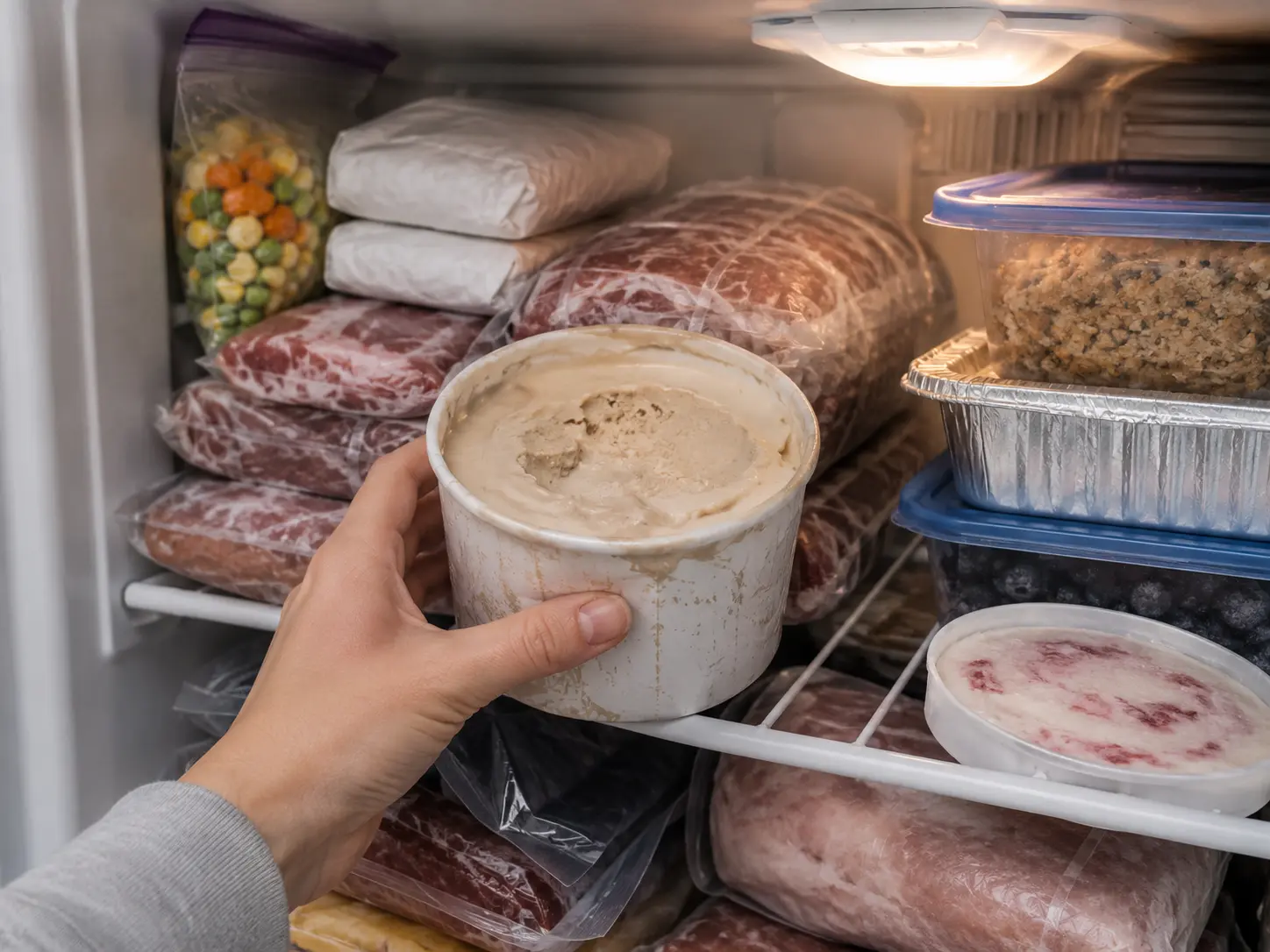
A half-empty freezer problem is frustrating, but a full freezer problem right before Thanksgiving, Christmas, New Year’s, or a family gathering feels much bigger. There may be a turkey, roast, frozen sides, desserts, bulk groceries, leftovers, or food you bought specifically for guests sitting behind that door.
That extra holiday load can also make a weak freezer problem easier to notice. Food near the door, upper shelf, or blocked airflow area may start softening before food in the middle shows obvious signs.
This is why small warning signs matter before the holiday rush. Soft ice cream, frost buildup, water near the appliance, or packages that do not feel fully frozen can be early clues that the freezer is not recovering the way it should.
Sign 1: Ice Cream Is Soft or Soupy
Ice cream is often one of the first foods homeowners notice when a freezer is getting weak. Meat may still feel mostly frozen, but ice cream can turn soft, slushy, or icy when the freezer temperature rises or fluctuates.
One soft container does not always mean the entire freezer is unsafe, especially if it was near the door or recently put away. If multiple containers are soft, or if other foods also feel less solid than usual, stop assuming the freezer is fine because it “still feels cold.”
A freezer can feel cold to your hand and still be too warm to keep food safely frozen. Use a thermometer when possible, and treat soft ice cream as a warning sign when the freezer is full of holiday food.
Sign 2: Meat Packages Are Flexible Instead of Solid
Frozen meat, poultry, and fish should feel firm when they have been stored correctly. If packages bend easily, feel soft around the edges, or have liquid inside the wrapping, the freezer may not be holding temperature consistently.
This matters because holiday freezers often hold expensive proteins. A turkey, roast, ham, steaks, seafood, or bulk meat order is not something to risk because the freezer is “probably okay.”
If food still has ice crystals or measures 40°F or below, FDA guidance says it may be safe to refreeze or cook. If perishable food has been above 40°F for too long, USDA food safety guidance recommends throwing it out rather than risking illness. (fda.gov)
Sign 3: Frost Is Building Up Fast
Some frost can happen when a freezer door is opened often, especially during holiday meal prep. Heavy frost, sudden frost, or frost that keeps coming back after you clear it can point to a freezer problem.
A bad door seal, blocked airflow, defrost issue, or warm air leak can all lead to frost buildup. When that happens, the freezer may work harder while doing a worse job of keeping food evenly frozen.
Watch where the frost appears. Frost around the door, on the back wall, or coating packages in one area can help a technician narrow down whether the problem is sealing, airflow, defrost, or temperature control.
Sign 4: Water Is Showing Up Near the Freezer
Water on the floor, under the freezer, or inside the compartment is not something to brush off. It may come from melting frost, a clogged drain, a door not sealing correctly, or food thawing enough to release moisture.
Before the holidays, this can become a bigger problem because the freezer is opened more often and packed tighter than usual. More food means less room for air to move, and more door openings give warm air more chances to enter.
If you see water and food feels softer than normal, treat it as urgent. Move high-value food if needed, avoid repeatedly opening the door, and have the freezer checked before the problem turns into a full food-loss situation.
Sign 5: The Freezer Runs Constantly but Food Still Is Not Solid
A freezer may run more often during heavy holiday use, especially if warm food was recently added or the door has been opened repeatedly. The concern is when it keeps running for long stretches but the food still is not staying frozen.
That can point to dirty condenser coils, weak airflow, a failing fan, a sealed system issue, a control problem, or a door seal that is letting warm air in. Some of those issues are simple, while others need professional diagnosis.
The important thing is not to wait for the freezer to stop completely. If it is working hard but not keeping up, that is the moment to call before the food loss gets worse.
Sign 6: Some Areas Are Frozen and Others Are Soft
Uneven freezing is one of the most confusing freezer problems. One shelf may seem fine while items near the door, top, bottom, or back wall start thawing.
This can happen when vents are blocked, food is packed too tightly, the door is not sealing, or the freezer fan is not moving cold air properly. It can also happen when a cooling problem is starting but has not yet caused a total freezer failure.
Before calling, look for overloaded areas or packages pushed tight against the vents. If moving items away from the vents does not help, or if food is already softening, it is time to get the freezer diagnosed.
Sign 7: The Door Seal Looks Loose, Dirty, or Damaged
A freezer door seal can cause bigger problems than most homeowners expect. If the gasket is torn, loose, dirty, warped, or not closing evenly, warm kitchen air can leak in and make the freezer work harder.
A quick way to check is to close the door on a dollar bill or thin piece of paper. If it slides out easily in several spots, the seal may not be tight enough to keep warm air out.
Do not force the door or ignore a seal that looks suspicious. A bad seal can lead to frost, soft food, long run times, and temperature swings that become more stressful when the freezer is full.
What You Can Safely Check First
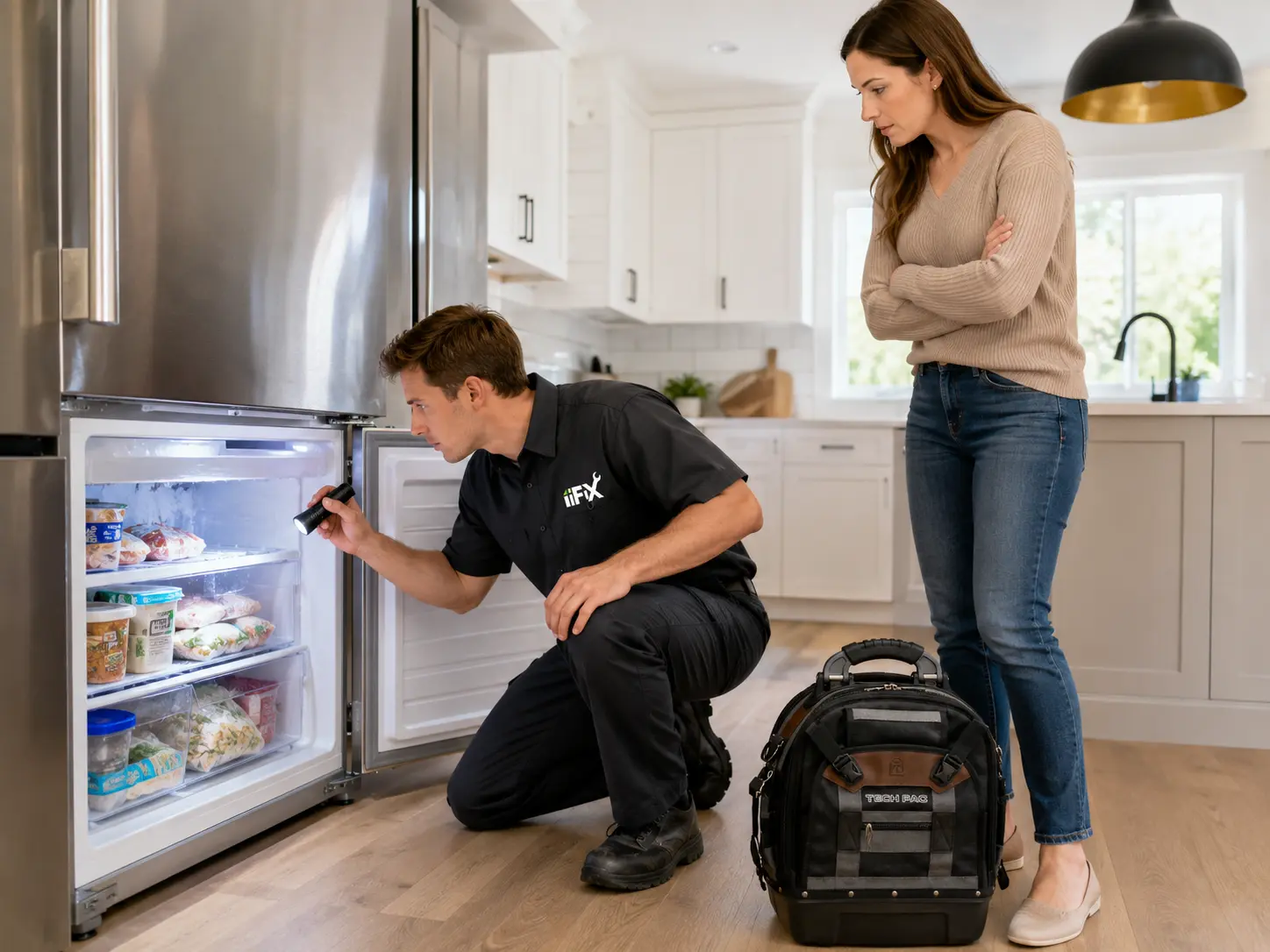
Start by checking the freezer temperature with an appliance thermometer if you have one. A properly cold freezer should be at 0°F or below, and food safety decisions should be based on temperature, ice crystals, and how long food may have been above safe temperatures. (foodsafety.gov)
Next, check whether the door is closing all the way, whether food is blocking the vents, and whether the freezer is packed so tightly that air cannot circulate. Also listen for the fan, look for heavy frost, and check whether the condenser area is extremely dusty if it is safely accessible.
Avoid taking panels apart, forcing frozen parts loose, or repeatedly opening the freezer to “see if it feels colder yet.” Every door opening lets warm air in, which makes the freezer work harder and gives the food less time.
When to Stop Guessing and Call a Technician
Call for freezer or refrigerator diagnosis if food is softening, the freezer cannot hold 0°F, frost keeps coming back, water is showing up, the fan sounds wrong, or the freezer is running constantly without keeping food solid. These are not just appliance annoyances when holiday food is involved.
You should also call if the freezer is full and you are not sure whether the issue is getting worse. Waiting until the freezer fully fails can mean losing food, scrambling for storage, and trying to schedule service when everyone else is already dealing with holiday appliance problems.
iFiX can help you talk through what you are seeing and determine the next best step. If the freezer needs professional attention, a technician can diagnose the issue, explain what is happening, and let you know what repair options make sense.
What iFiX Checks During a Freezer or Refrigerator Diagnosis
A freezer problem is not always caused by one obvious part. A technician may need to check temperature performance, airflow, door sealing, fan operation, frost patterns, defrost function, compressor behavior, and whether the appliance is actually moving cold air the way it should.
That diagnosis matters because “still cold” does not always mean “working correctly.” A freezer can be cold in one area, warm in another, and slowly putting food at risk without looking completely broken.
Jonathan, Bubba, or Zack can inspect the freezer, explain what is happening, and help you understand the best next step before the holiday food situation gets worse.
Do Not Wait Until the Freezer Stops Completely
A weak freezer gives you a window to act before the holiday becomes a scramble. Soft ice cream, flexible meat packages, frost buildup, water, warm spots, or constant running are all signs that the freezer should be checked.
If your freezer is full and something feels off, protect the food first. Check the temperature if you can, move high-value food to another freezer if needed, and call before the problem becomes a full holiday emergency.
Call iFiX Appliance Repair for freezer or refrigerator diagnosis in Northern Utah before holiday food is at risk.
FAQs About Freezers Not Keeping Food Safe
What temperature should my freezer be?
Your freezer should be kept at 0°F or below for frozen food storage. FoodSafety.gov notes that freezer storage guidelines are based on food being stored continuously at 0°F or lower. (foodsafety.gov)
Is food still safe if my freezer feels cold but the food is soft?
Not always. A freezer can feel cold to your hand while still being too warm to keep food safely frozen, so use an appliance thermometer when possible and check individual packages.
FDA guidance says food may be safe to refreeze or cook if it still contains ice crystals or is 40°F or below. If you cannot confirm the temperature or timing, be cautious with perishable holiday food. (fda.gov)
Why is my freezer cold but not freezing food solid?
A freezer that feels cold but is not freezing food solid may have blocked airflow, a bad door seal, frost buildup, dirty condenser coils, a fan problem, a defrost issue, or a cooling system problem. The freezer may still produce cold air but not enough consistent cold to keep food safely frozen.
Is soft ice cream a sign my freezer is failing?
Soft ice cream can be an early sign that the freezer temperature is too warm or fluctuating. It is more concerning when other foods are also soft, the freezer is running constantly, or frost and water are showing up.
Should I unplug my freezer if it is not keeping food frozen?
Do not unplug the freezer unless there is an electrical hazard, burning smell, visible damage, or a technician tells you to. Keeping the door closed and preserving whatever cold remains is usually better while you move food or wait for diagnosis.
Can a full freezer stop freezing properly?
Yes, especially if food is blocking air vents or packed so tightly that cold air cannot circulate. A full freezer can hold cold well when everything is working properly, but blocked airflow can create warm spots and uneven freezing.
When should I call iFiX?
Call iFiX if your freezer is full and food is softening, frost is building up, water is appearing, the freezer is running constantly, or you cannot confirm that it is holding the right temperature. Calling early gives you the best chance to protect the food before the holiday rush.
Will iFiX explain what is wrong before starting the repair?
Yes. iFiX diagnoses the issue, explains what is happening, and helps you understand your repair options before moving forward.
Call (801) 731-4349 or book online. Same-day appointments available.