
What causes white residue on dishes from the dishwasher?
This is one of the most misunderstood issues. Many service professionals even have issues resolving the issue or understanding what is going on. Having white residue or cloudiness on dishes can cause distress and embarrassment when giving a glass to a visitor while entertaining. Most people will at this point condemn the dishwasher, throw away the dishes the dishes and buy new products. These issues can be resolved by taking the right steps, and in many cases start with understanding proper dishwasher care and usage.
There are two main reasons why white residue or cloudiness accumulates in the dishwasher and on the dishes. The first is widely known: hard water. Here in Ogden we have hard water, which is a common contributor to mineral buildup in appliances and is often addressed during routine appliance maintenance. To obtain an estimated hardness you can call the city in which you live, give them your address and they can give you your estimated water hardness. Knowing this number will help you in your selection of detergent and setting on a water softener. The second is due to corrosion. Corrosion can be caused by over softening water. Corrosion can manifest itself in etching and iridescence, which is the rainbow look; as well as too hot of water and running the dishwasher on unnecessary long cycles.
Hard water is water with a high dissolved mineral content. In Ogden, our water is primarily from runoff and ground water. As the water percolates through the various levels of soil and stone, it absorbs various minerals including calcium, lime, and magnesium. These minerals are what we see stuck to our various plumbing fixtures, appliances, and shower glass, and they are a common reason homeowners eventually need professional dishwasher repair.
Is hard water in a dishwasher reversible?
Fortunately, hard water issues are very reversible. First, the buildup in the dishwasher needs to be removed. The easiest way to accomplish this is to dump between .5 and 1 gallon of white distilled vinegar in the dishwasher and do NOT run a cycle. Most older units will take the full gallon. Dump enough vinegar in that it touches the float in the bottom of the dishwasher. Allow the vinegar to sit at least 3-4 days. After the 3-4 day period, run a cycle on the hottest and longest cycle with no dishes or detergent. This will clear the buildup in the pump motor assembly. If needed, repeat. Now that the motor is clean we need to clean the spray arms, tub and racks. This is done by running a dishwasher cleaner through, similar to the process outlined in our guide on why dishwasher maintenance matters.
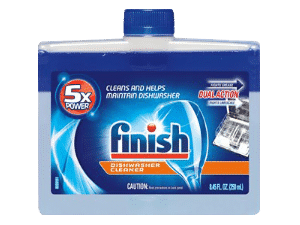
Follow the instruction on the bottle for use. If after the cleaning cycle there are still deposits and clogged spray arms, repeat until clear. It may take 2-4 bottles. These steps will strip the dishwasher of the buildup and often resolve issues related to poor cleaning performance, which are also covered in our article on dishwashers not cleaning dishes properly.
Now the big question, how to clear the white residue on the dishes?
Now the big question, how to clear the white residue on the dishes? First, we need to find out if the dishes have hard water or if they are corroded and etched. This is done by getting a paper towel and wetting it with white distilled vinegar. Put part of the paper towel inside the glass and part on the outside. Proceed to scrub dish in a small area. After scrubbing the dish, wipe it dry. Is the white residue on the dishes clean and clear? If so, the white residue on the dish is due to hard water. Now if you are like me, you don’t want to scrub all the dishes with vinegar. You can use a great product that will do it for you called Finish Booster, which is often recommended during pre-holiday dishwasher maintenance.
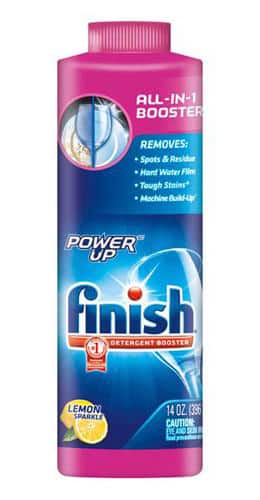
This product will strip off all the white residue on dishes from the dishwasher. It will not however, fix etching. This is not a product that needs to be continually used. It is only needed to strip off the white residue on dishes. It will take several loads but each time you should see improvement. Follow instructions on bottle for use. If the paper towel and vinegar test did not work or the white residue remains it has been corroded and etched which is permanent and irreversible. At that point, replacement or repair guidance like our repair vs replacement guide may be helpful.
How to prevent future damage to our dishes
We now have a clean dishwasher and know if our dishes can be saved. How do we prevent this from reoccurring? First we need to verify how hot our kitchen sink inlet water is. Too hot of water and too cool of water can cause similar issues. The optimum temperature is 130 degrees. The reason for the 130 degrees is by the time the water goes into a cold dishwasher we need to ensure the water is at least 120 degrees to activate the parts of the detergent immediately after dispensing, which is a common issue addressed during appliance troubleshooting consultations.
How should I use my dishwasher?
Each time you go to start the dishwasher, run the hot water to purge out any cool water. This will allow your dishwasher to start and fill with hot water. Scrape your dishes of anything solid or of large chunks, but put the dishes in dirty. Yes, put the dishes in dirty. Do not clean your dishes before you load them. Putting in dirty dishes will get the dishes cleaner and help your dishwasher operate properly, especially when combined with the practices outlined in our dishwasher usage guidelines.
About iFiX
We at iFiX are here to serve you! This article will likely help many of you solve your issues without incurring a service call charge. That’s great! If your appliance is operating properly, that is our goal here at iFiX. When professional help is needed, our appliance service team is always ready to help. Here at iFiX we put our customers first, not their wallets!
Call (801) 731-4349 or book online. Same-day appointments available.